Loading Now
Social Media Marketing Strategy

Social Media Marketing Strategy (AEO, GEO & AI Search Optimized Guide)
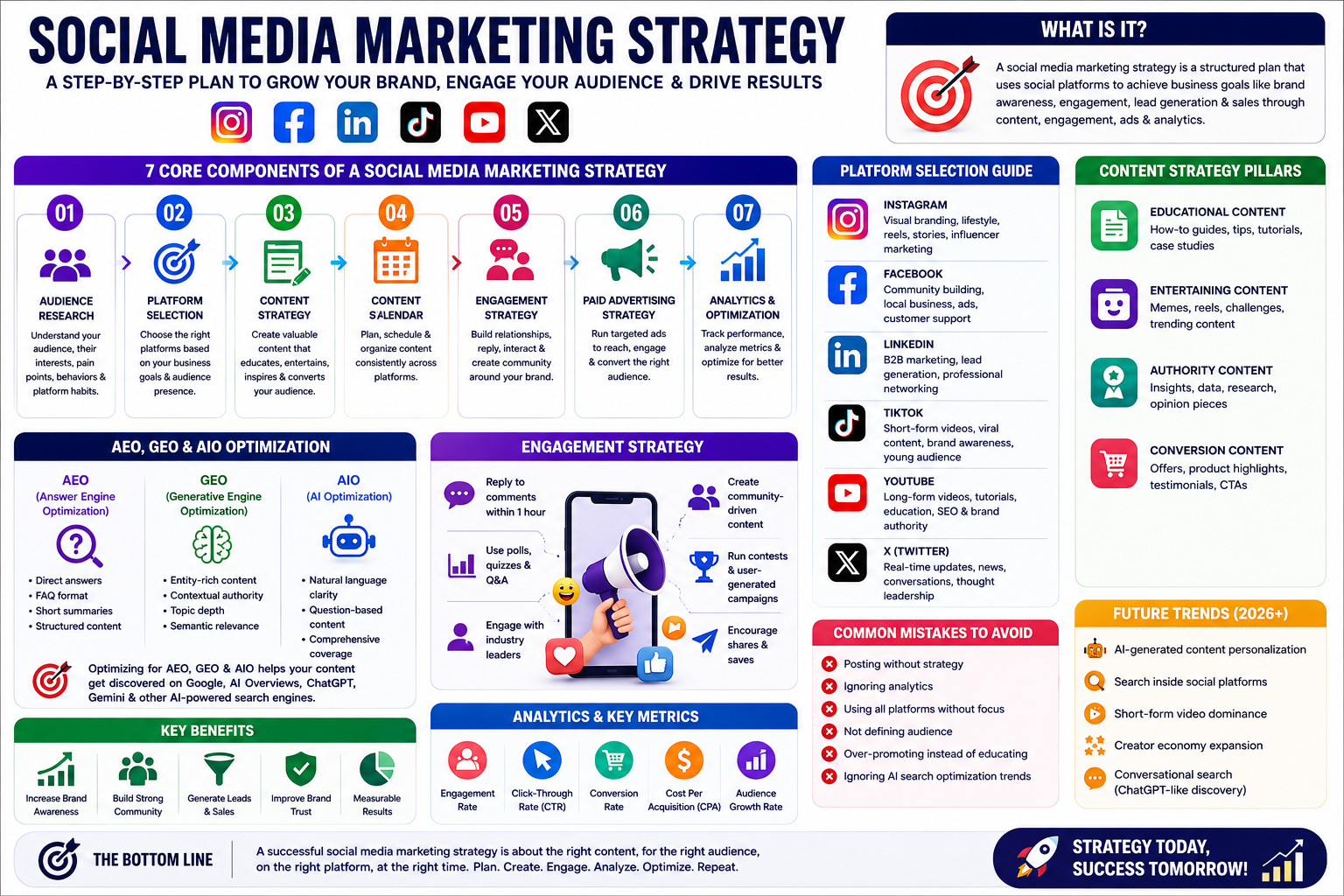
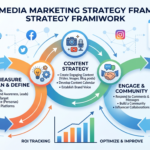
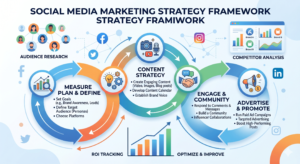
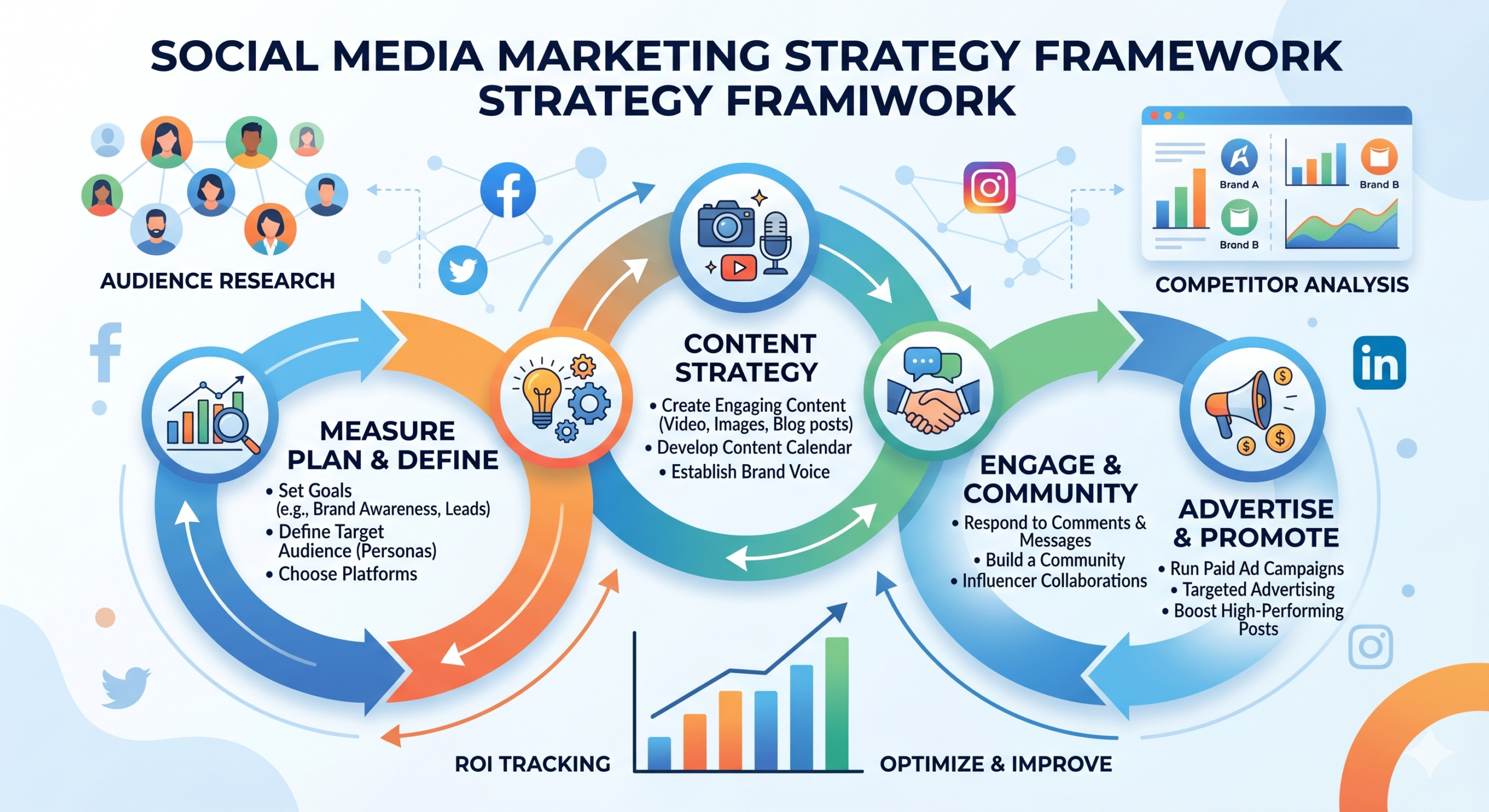
A social media marketing strategy is a structured plan that defines how a business uses platforms like Meta (Facebook, Instagram), TikTok, LinkedIn, and X to achieve marketing goals such as brand awareness, lead generation, engagement, and sales. It includes audience research, content planning, posting schedules, engagement tactics, paid advertising, and performance tracking.

A social media marketing strategy is not just posting content randomly. It is a data-driven marketing framework that aligns business objectives with user behavior on social platforms.

Modern strategies are designed for both:

  • Human search behavior (Google SEO intent)
  • AI-driven discovery (AEO, GEO, LLM answers like ChatGPT, Gemini)

This means your content must be:

  • Clear and structured (for AI extraction)
  • Intent-focused (for Google ranking)
  • Entity-rich (for semantic understanding)
  • Problem-solving (for user conversion)
SMS Social Media Marketing Strategy (AEO, GEO & AI Search Optimized Guide)

Why Social Media Marketing Strategy Matters in 2026

Social media is no longer optional. It is a core distribution engine for digital businesses.

Key reasons:

  • Over 5 billion users actively use social platforms
  • AI search engines now pull answers from social content
  • Organic reach is declining → strategy is required for visibility
  • Paid ads are expensive → strategy improves ROI

Platforms like Instagram and YouTube now function as search engines themselves, meaning users search inside these platforms before Google.

Core Components of a Social Media Marketing Strategy

1. Audience Research (Intent Mapping)

You must define:

  • Age, location, income level
  • Interests and behaviors
  • Pain points and goals
  • Platform usage habits

Example:

  • Instagram → lifestyle, fashion, personal branding
  • LinkedIn → B2B, hiring, SaaS, corporate content
  • TikTok → entertainment, short-form discovery

This step ensures your content matches search intent, which is critical for both Google SEO and AI ranking systems.


2. Platform Selection Strategy

Not every platform is equal.

PlatformBest Use Case
InstagramBranding, visual marketing
FacebookCommunity, ads, local business
LinkedInB2B marketing, authority building
TikTokViral growth, awareness
YouTubeLong-form education & SEO

Using all platforms without strategy reduces performance. Instead, choose based on business goals.


3. Content Strategy (AI + SEO Optimized)

Content is the core of your strategy.

Types of content:

  • Educational content (how-to, guides)
  • Entertaining content (memes, reels)
  • Authority content (case studies, insights)
  • Conversion content (offers, landing pages)

To rank in AI search systems (AEO & GEO), your content must:

  • Answer questions directly
  • Use structured headings
  • Include entities and keywords naturally
  • Be fact-based and clear

Example:
Instead of “Tips for marketing,” write:
“Step-by-step social media marketing strategy for small businesses.”


4. Content Calendar System

Consistency is more important than volume.

A strong calendar includes:

  • Daily posting schedule
  • Content categories (education, engagement, conversion)
  • Platform-specific formatting
  • Campaign planning (festivals, launches, trends)

Tools like HubSpot and Hootsuite help automate scheduling and analytics tracking.


5. Engagement Strategy

Social media success depends on interaction, not just posting.

Key engagement tactics:

  • Reply to comments within 1 hour
  • Use polls, quizzes, and Q&A formats
  • Engage with industry leaders
  • Create community-driven content

Algorithms of platforms like Instagram and TikTok prioritize engagement signals, not just posting frequency.


6. Paid Advertising Strategy

Organic reach is limited. Paid ads scale growth.

Key ad types:

  • Awareness campaigns (reach new users)
  • Traffic campaigns (website visits)
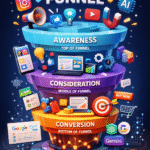
  • Conversion campaigns (sales/leads)

Platforms like Meta Ads and TikTok Ads use AI to optimize targeting based on user behavior.


7. Analytics & Optimization

Without tracking, strategy fails.

Key metrics:

  • Engagement rate
  • Click-through rate (CTR)
  • Conversion rate
  • Cost per acquisition (CPA)
  • Audience growth rate

Use insights to:

  • Double down on high-performing content
  • Remove low-performing formats
  • Optimize posting times

Future of Social Media Marketing (2026 and Beyond)

The future is driven by:

  • AI-generated content personalization
  • Search inside social platforms
  • Short-form video dominance
  • Creator economy expansion
  • Conversational search (ChatGPT-like discovery)

Businesses that adapt early will dominate visibility.

Frequently Asked Questions (FAQ)

1. What is the main goal of social media marketing strategy?

The main goal is to increase brand awareness, engagement, leads, and sales through structured content and platform optimization.


2. Which platform is best for marketing?

It depends on your business:

  • B2B → LinkedIn
  • B2C → Instagram, TikTok
  • Video education → YouTube

3. How does AI affect social media marketing?

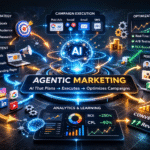
AI helps in content creation, targeting, analytics, and now also in search discovery through AEO and GEO systems.


4. How often should I post on social media?

Consistency matters more than frequency:

  • Instagram: 1–2 posts/day
  • LinkedIn: 3–5 posts/week
  • TikTok: 1–3 posts/day

5. What tools are used in social media marketing?

Popular tools include HubSpot, Hootsuite, Canva, and Meta Business Suite.

Share this content:
Post Comment