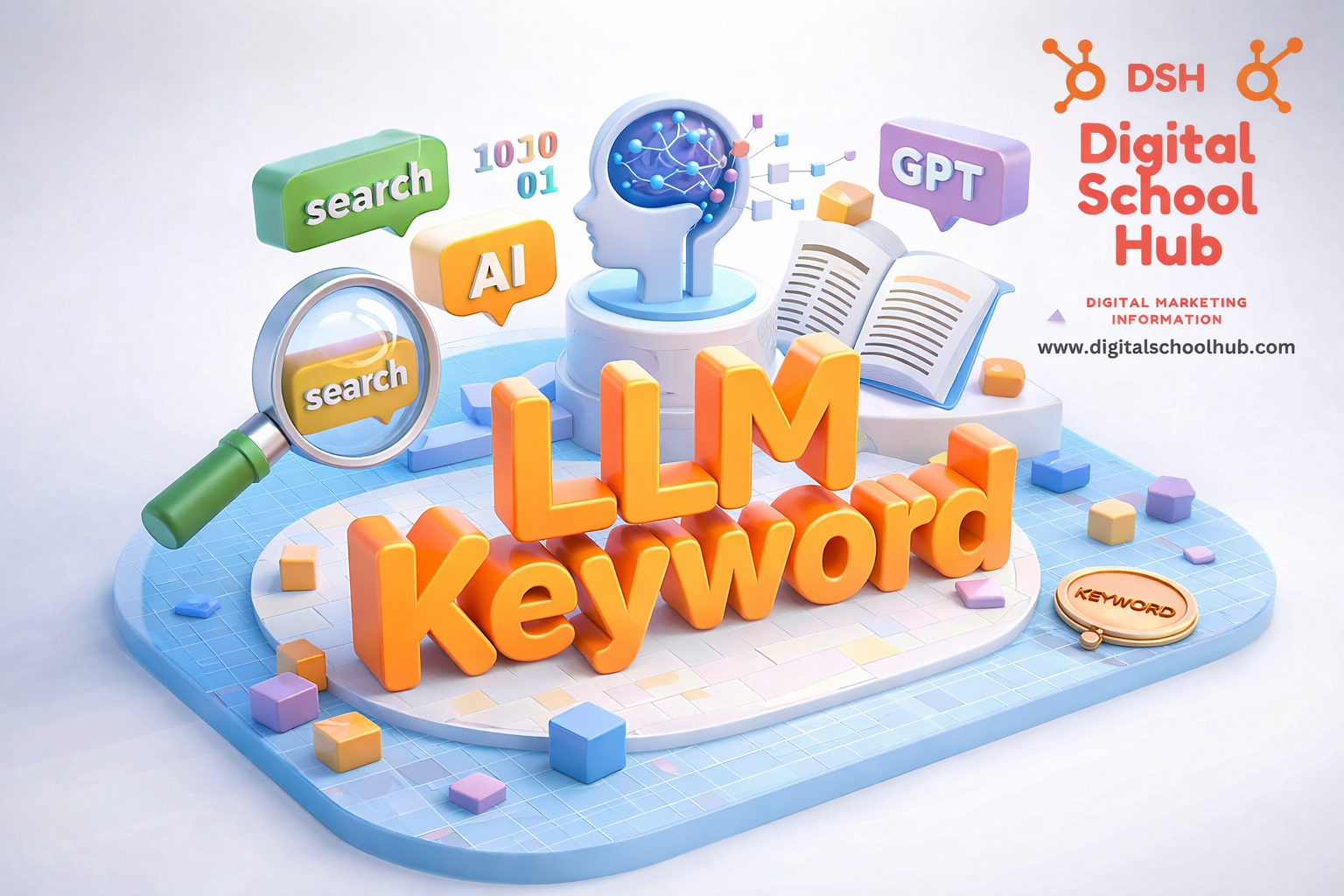
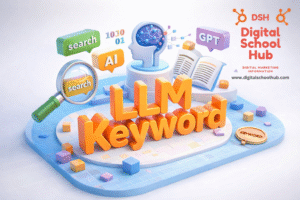
Large Language Models (LLMs) has changed how people search, create content, and interact with artificial intelligence. As tools like ChatGPT by OpenAI, Gemini by Google, and Claude by Anthropic become mainstream, a new term has started appearing in searches: “LLM keyword.”
But what exactly does “LLM keyword” mean — especially from a customer’s perspective?
This blog explains the term in simple language, based on how customers actually understand and use it when searching online.
Before defining “LLM keyword,” it’s important to understand what LLM means.
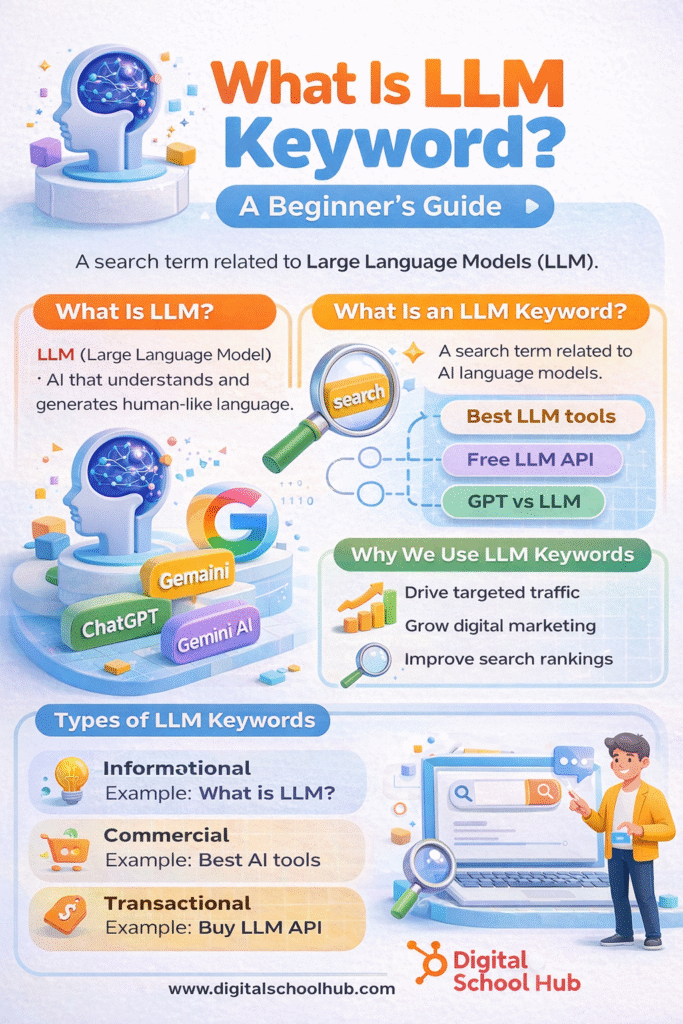
LLM stands for Large Language Model — a type of artificial intelligence trained on massive amounts of text data. These models can:
Generate human-like text
Answer questions
Write emails and blogs
Summarize documents
Translate languages
Assist with coding
To customers, LLM simply means:
“AI that can understand and write like a human.”
They don’t think in terms of neural networks or transformer architectures. They think in terms of practical use — content writing, chatbots, automation, and productivity.
What Is an LLM Keyword?
From a customer perception standpoint, an LLM keyword refers to:
A word or phrase people type into search engines to find information, tools, or services related to Large Language Models.
It is not necessarily a technical term. Instead, it’s a practical, search-focused concept.
For example, when someone searches:
“Best LLM for content writing”
“Free LLM tools”
“LLM vs GPT difference”
“How does LLM work?”
These are all examples of LLM-related keywords.
Customers use these keywords to:
Learn about AI
Compare tools
Buy services
Solve business problems
How Customers Interpret “LLM Keyword”
Different users perceive the term differently depending on their goal.
1. For General Users
For everyday internet users, “LLM keyword” simply means:
AI-related search terms.
They associate it with tools like chatbots and content generators. They may not even know what LLM stands for, but they understand it relates to smart AI writing systems.
2. For Business Owners
Entrepreneurs and digital marketers interpret LLM keywords as:
Search terms that help attract AI-focused traffic.
They want to know:
Which LLM keywords are trending?
How to rank for AI-related searches?
What keywords bring high-intent customers?
For them, LLM keywords represent opportunity — a growing digital market driven by AI adoption.
3. For Developers and Tech Professionals
Technical users see LLM keywords in two ways:
SEO keywords related to AI models
Prompt keywords used inside AI tools
For example:
“Fine-tuning LLM”
“Open-source LLM models”
“LLM API integration”
Here, the term is more functional and performance-oriented.
Why Is “LLM Keyword” Becoming Popular?
There are three main reasons customers are increasingly searching for this term.
1. AI Is Mainstream
Artificial intelligence is no longer limited to researchers. Tools like ChatGPT have made AI accessible to students, marketers, freelancers, and enterprises.
As more people adopt AI tools, they naturally search for related keywords.
2. Businesses Want AI Visibility
Companies are integrating AI into:
Customer support
Content marketing
Sales automation
Data analysis
To compete in this space, businesses target LLM-related keywords to capture AI-interested audiences.
3. Search Behavior Is Changing
Search engines are increasingly AI-powered. As AI integrates deeper into platforms like Google, users search differently.
Instead of short queries like:
“AI tools”
They now search:
“Best LLM for legal document drafting”
“Affordable LLM API for startups”
These longer, more specific queries are considered high-value LLM keywords.
Types of LLM Keywords (From a Customer Viewpoint)
Customers generally encounter three categories of LLM keywords.
1. Informational Keywords
Used when people want to learn.
Examples:
What is LLM?
How does LLM work?
LLM vs machine learning
Examples of LLM models
These users are in research mode.
2. Commercial Keywords
Used when users are comparing products.
Examples:
Best LLM tools 2026
ChatGPT alternatives
Gemini vs Claude comparison
Affordable LLM software
Here, users are evaluating options before purchasing.
3. Transactional Keywords
Used when customers are ready to buy.
Examples:
Buy LLM API
Enterprise LLM pricing
Hire LLM developer
LLM integration service
These keywords carry strong business intent.
LLM Keyword vs AI Keyword
Customers often confuse these terms.
AI keyword is broad. It may include robotics, automation, data science, and computer vision.
LLM keyword is specific to language-based AI systems.
For example:
“AI robot” → not necessarily LLM
“GPT language model” → clearly LLM-related
This distinction matters for businesses trying to target the right audience.
Real-World Example of LLM Keyword Usage
Imagine a freelancer wants to automate blog writing. They search:
“Best LLM for SEO content writing”
Here’s what happens:
“Best” indicates comparison intent
“LLM” indicates AI language model
“SEO content writing” indicates a specific use case
Search engines then display:
Product comparison articles
Reviews of tools
Landing pages of AI software
This demonstrates how LLM keywords connect user needs with relevant solutions.
Customer Perception: Simplicity Over Complexity
Most customers do not think about algorithms or datasets. Their perception is practical:
Can this AI write my emails?
Can it generate blog content?
Can it automate my customer support?
Is it affordable?
So when they use the term “LLM keyword,” they are really referring to:
Search phrases that help them find AI solutions quickly.
It’s about usability, not technical depth.
Business Impact of LLM Keywords
From a marketing standpoint, targeting LLM keywords can:
Drive highly targeted traffic
Attract tech-savvy customers
Capture early adopters
Increase SaaS conversions
As AI adoption grows globally, LLM-related search terms are becoming high-growth digital assets.
Businesses that understand customer perception can create:
Educational blogs
Comparison guides
Product-focused landing pages
AI use-case case studies
All optimized around relevant LLM keywords.
Simple Definition (Customer-Friendly)
To summarize clearly:
LLM keyword refers to search terms people use to find information, tools, or services related to AI systems that understand and generate human language.
It can include:
Educational queries
Product comparisons
Purchase-ready search terms
Prompt-related AI phrases
Final Thoughts
The term “LLM keyword” may sound technical, but from a customer perspective, it is straightforward. It represents the bridge between user intent and AI-powered solutions.
As tools like ChatGPT and Gemini continue to shape the future of digital interaction, LLM-related searches will only increase.
Understanding how customers perceive and use LLM keywords allows businesses, marketers, and creators to align their content with real search behavior.
In simple terms:
LLM keywords are the words customers use to find the future of AI.













Post Comment