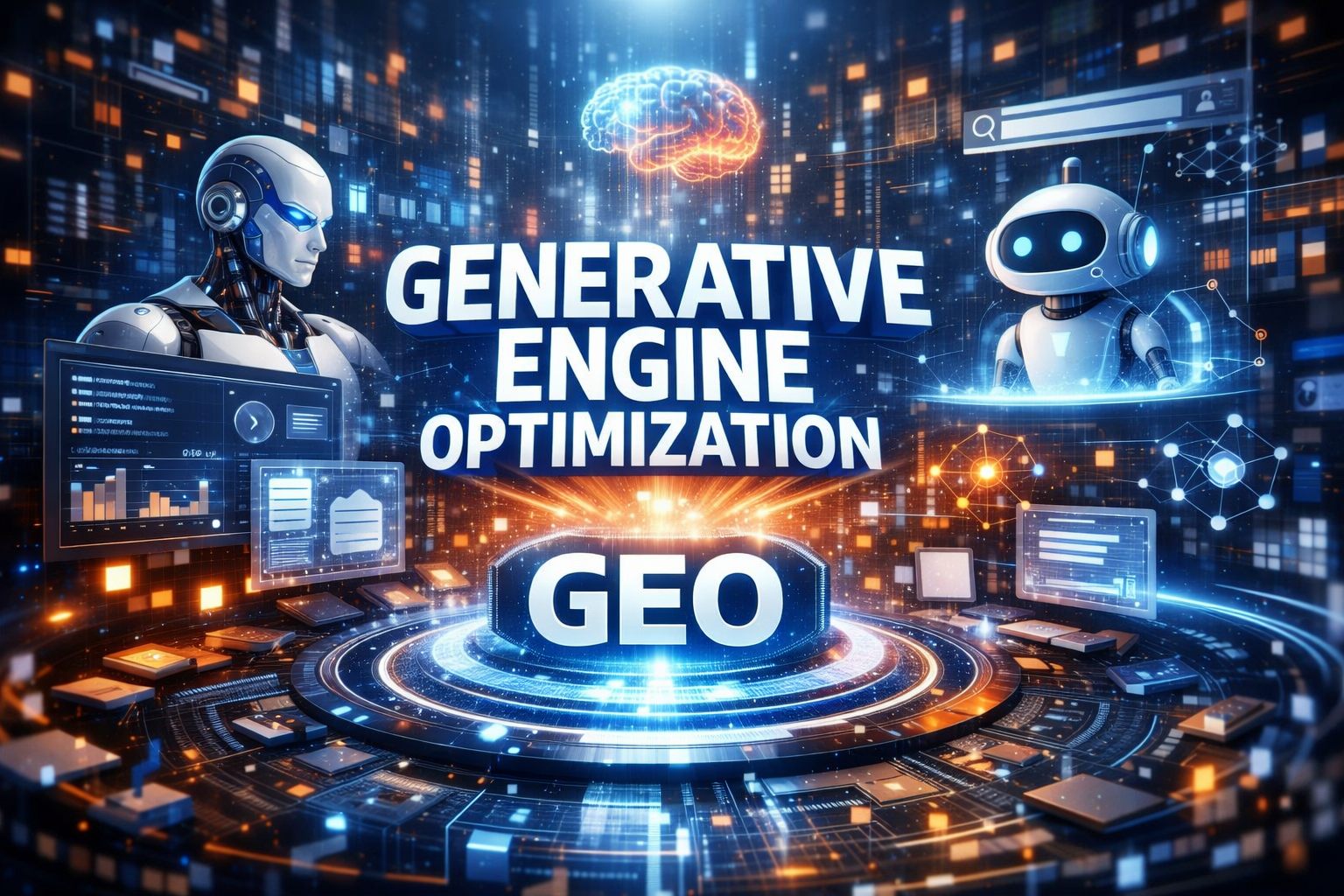
Generative Engine Optimization (GEO) is rapidly emerging as a critical evolution of traditional SEO, reshaping how content is discovered, ranked, and consumed in the age of artificial intelligence. As AI-powered systems like OpenAI, Google, and Microsoft integrate generative AI into search experiences, the rules of visibility are fundamentally changing. Instead of simply optimizing for search engine rankings, GEO focuses on optimizing content for AI-generated responses, summaries, and conversational outputs.
This shift demands a new strategy—one that aligns with how large language models (LLMs) interpret, synthesize, and present information.
Generative Engine Optimization (GEO) refers to the process of structuring and optimizing content so that it is easily understood, extracted, and cited by AI-powered engines. Unlike traditional SEO, which prioritizes keywords and backlinks, GEO emphasizes:
Contextual clarity
Semantic depth
Structured knowledge
Authority and trustworthiness
AI engines no longer just index pages—they generate answers. This means your content must be optimized not just to rank, but to be selected, summarized, and quoted.
Why GEO Matters in 2026 and Beyond
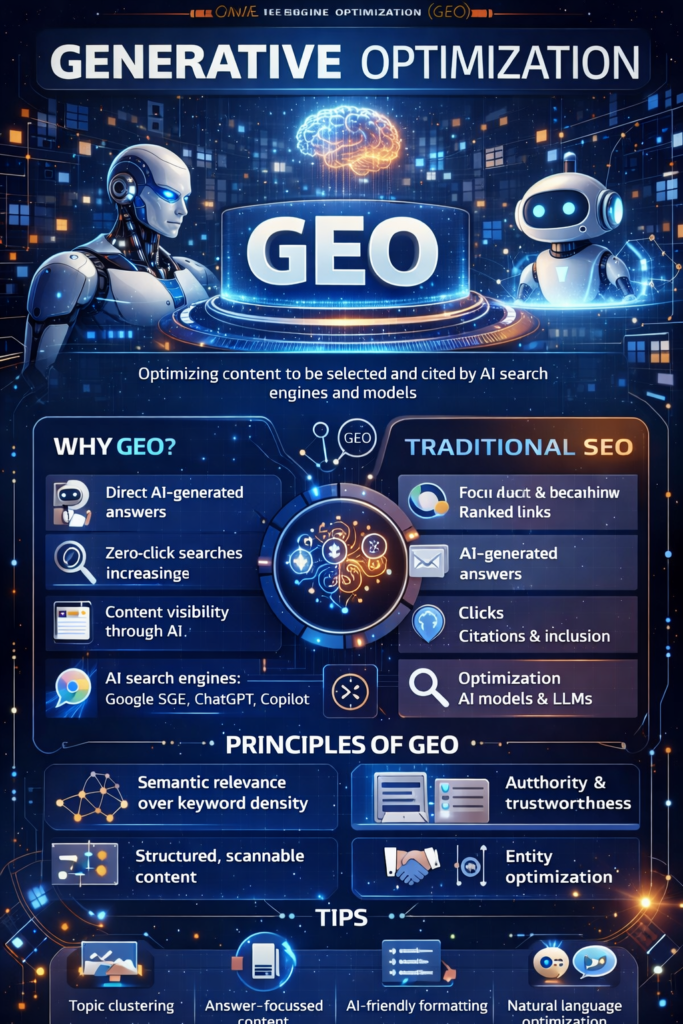
The rise of AI-driven search experiences like Google’s Search Generative Experience (SGE) and AI assistants has reduced reliance on traditional blue-link results. Users now receive direct, conversational answers.
Key implications:
Zero-click searches are increasing
AI summaries replace multiple web visits
Content visibility depends on AI inclusion, not ranking alone
If your content is not optimized for AI interpretation, it risks becoming invisible—even if it ranks well in traditional search results.
GEO vs Traditional SEO
Aspect
Traditional SEO
Generative Engine Optimization
Focus
Keywords & backlinks
Context & meaning
Output
Ranked links
AI-generated answers
Content Style
Keyword-rich
Conversational & structured
Goal
Clicks
Citations & inclusion
Optimization
Search engines
AI models & LLMs
Core Principles of GEO
1. Semantic Relevance Over Keyword Density
AI models understand meaning, not just keywords. Instead of repeating phrases, focus on:
Topic coverage
Related concepts
Natural language flow
For example, instead of repeating “Generative Engine Optimization,” include related terms like:
AI search optimization
LLM content strategy
AI-driven indexing
2. Structured, Scannable Content
AI prefers content that is easy to parse. Use:
Headings (H1, H2, H3)
Bullet points
Tables
Clear sections
This improves the chances of your content being extracted into AI-generated summaries.
3. Authority and Trust Signals
AI models prioritize credible sources. Strengthen your authority with:
This improves your chances of being referenced in AI outputs.
GEO Content Framework (Step-by-Step)
Step 1: Topic Clustering
Group related topics into clusters:
Main topic: Generative Engine Optimization
Subtopics:
AI search engines
LLM content optimization
AI ranking factors
This creates semantic depth.
Step 2: Intent Mapping
Identify user intent:
Informational: “What is GEO?”
Transactional: “Best GEO tools”
Navigational: “GEO strategy guide”
Tailor content accordingly.
Step 3: AI-Friendly Formatting
Structure your content for extraction:
Use concise paragraphs
Include definitions early
Add summaries and key takeaways
Step 4: Natural Language Optimization
Write conversationally:
Use simple, clear language
Avoid keyword stuffing
Answer questions directly
This aligns with how AI generates responses.
Step 5: Continuous Updates
AI models favor fresh, relevant content. Regularly update:
Statistics
Examples
Industry trends
Advanced GEO Strategies
1. Prompt-Oriented Content Design
Think about how users interact with AI:
“Explain GEO in simple terms”
“Best GEO strategies in 2026”
Create content that directly answers these prompts.
2. Multi-Format Content
AI pulls from various formats:
Blog posts
FAQs
Guides
Lists
Diversify your content structure.
3. Knowledge Graph Optimization
Ensure your content contributes to structured knowledge:
Define terms clearly
Use consistent naming
Link related concepts
4. Conversational Depth
Include layered explanations:
Beginner explanation
Intermediate insights
Advanced strategies
This increases usability across different user levels.
Common GEO Mistakes to Avoid
Keyword stuffing instead of semantic writing
Thin content lacking depth
Unstructured formatting
Ignoring user intent
Outdated information
These reduce the likelihood of AI inclusion.
Tools Supporting GEO
Several tools can help implement GEO strategies:
AI writing assistants
NLP analysis tools
Content optimization platforms
Search intent analyzers
Platforms powered by companies like OpenAI and Google are leading this transformation.
The Future of GEO
Generative Engine Optimization is not a trend—it is the next phase of search evolution. As AI becomes the primary interface for information retrieval:
Content will compete for AI attention, not just rankings
Authority and clarity will outweigh technical tricks
Brands must become trusted knowledge sources
Key Takeaways
GEO optimizes content for AI-generated answers, not just search rankings
Semantic clarity and structured content are essential
Authority and trust signals significantly impact visibility
Conversational, intent-driven writing performs best
GEO and SEO must work together for maximum impact
Conclusion
Generative Engine Optimization represents a paradigm shift in digital visibility. As AI systems redefine how users access information, businesses and creators must adapt their strategies accordingly. By focusing on clarity, structure, and authority, you can ensure your content is not only discoverable but also selected and amplified by AI engines.

















Post Comment